
 By mudir
A Missionary’s Journey Across Three Nations
Fr. Bonifacio Jr. Apaap, for World Mission, Oct 2025
I am Fr. Bonifacio Autentico Apaap Jr., a Filipino Comboni Missionary. I was born in Bohol, raised in Bukidnon, and I am the eldest of eight siblings. A teacher by profession, I was formed for mission with both mind and heart. From an early age, I felt drawn to serve others—first as an educator, and eventually as a missionary priest.
A First Mission in Eritrea
In 2004, I was assigned to Eritrea for my first missionary post—a country with ancient Christian roots, stark beauty, and ongoing struggles. I was immediately struck by the resilience and simplicity of its people. Eritrea’s spiritual heritage is deeply embedded in daily life, with Orthodox, Catholic, and Evangelical traditions coexisting under a challenging political climate.
To truly serve, I immersed myself in the culture and learned two local languages: Tigrinya and Kunama. These languages opened doors to real human connection. I could preach, yes—but more importantly, I could listen, accompany, and pray with the people in their heart language.
My work included regular pastoral care, liturgical celebrations, catechesis, and formation. I also offered ministry to Filipino Overseas Workers (OFWs), many of whom found themselves isolated in private homes or distant locations. We celebrated Mass together, organized retreats, and marked birthdays and anniversaries—small moments that restored a sense of belonging.
My mission ended abruptly in 2007 when I, along with other foreign missionaries, was expelled from the country. It was a difficult departure. But I carried with me the grace of relationships, memories of faith shared, and the assurance that the seeds we planted would bear fruit in time.
Years of Service in Sudan
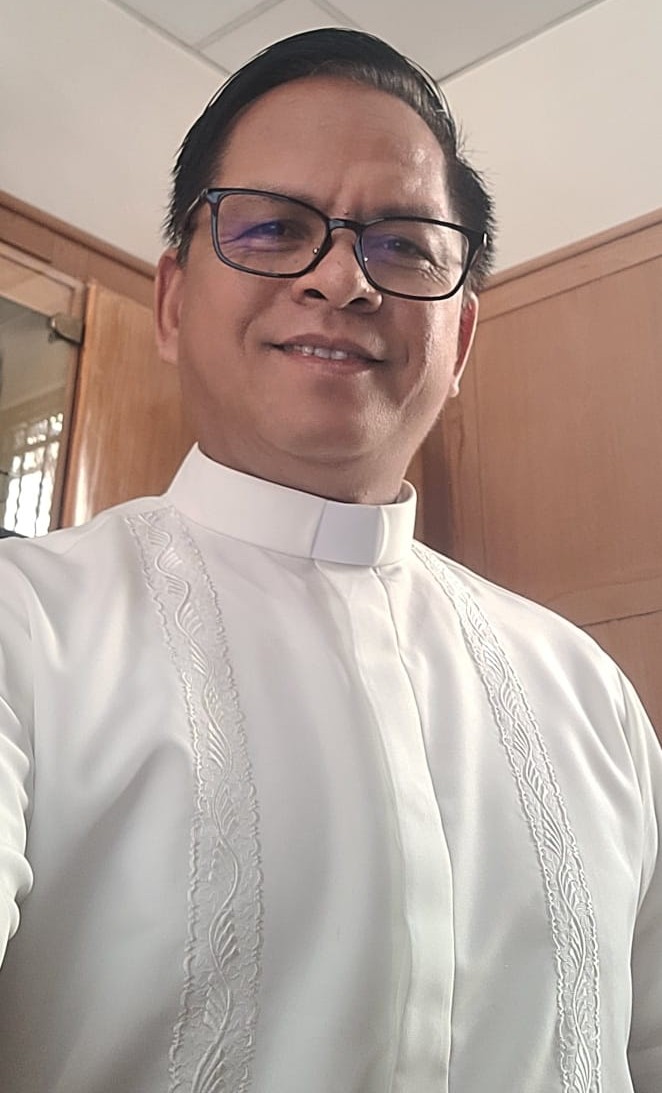
In 2010, I was assigned to Sudan, where I would spend over a decade in various roles. I began in Kosti as Finance Administrator of the Pastoral Region, and later moved to Khartoum, where I served as Finance Administrator of the Archdiocese and as Principal of the High School Department at Comboni College.
My responsibilities in administration demanded financial oversight, accountability, and stewardship—often under difficult circumstances. But I viewed these roles not as detached from mission but as vital expressions of it. To care for resources is to care for people. It meant ensuring that schools remained open, teachers were paid, and services continued for the poor.
While handling financial matters, I continued to deepen my Arabic skills—particularly Gulf Arabic, which helped me communicate effectively in everyday settings, including interfaith dialogues and pastoral visits. The context of Sudan, a predominantly Islamic country, called for sensitivity and clarity. My ability to speak Arabic allowed me to build trust and mutual understanding.
I also ministered actively to the Filipino migrant community. Many OFWs in Sudan faced long work hours and separation from families. I celebrated monthly Masses, led seasonal recollections, and visited Filipinos in homes, hospitals, and workplaces. In times of crisis or celebration, I was there as a brother and spiritual father.
At Comboni College, I saw education as an instrument of peace. Muslim and Christian students studied side by side, exchanging ideas and forming friendships. As Principal, I guided students and teachers alike in values of coexistence, integrity, and responsibility. The school became more than a place of learning—it became a witness to the possibility of harmony in a divided world.
The War That Changed Everything
In April 2023, Sudan descended into violent conflict. Armed clashes broke out in Khartoum, trapping thousands in their homes. For nine days, I hid underground with fellow missionaries beneath Comboni College, with limited access to food and water. The sounds of gunfire and explosions filled the air.
When we finally evacuated, the city was devastated. Streets were littered with debris, and the bodies of civilians lay unburied. The stench of destruction filled the air. I left behind a school, an office, and documents—but most painfully, I left behind people: my students, parishioners, colleagues, and friends.
This experience was the darkest of my missionary journey. And yet, in that darkness, I encountered the crucified Christ more intimately than ever before. I understood, with raw clarity, what it means to suffer with the people, to walk with them through danger, and to leave everything in the hands of God.
A New Mission in Egypt
After the evacuation, I was transferred to Egypt, where I now serve as Finance Assistant of the Comboni Province – Egypt Zone and Principal of Holy Family School for Boys in Helwan, a southern district of Cairo.
Arriving in Egypt felt like stepping into both a new mission and a continuation of the same journey. Egypt’s Christian community—especially the Coptic Orthodox Church—has a rich and ancient heritage. And yet, the challenges of today are very real: poverty, migration, religious tensions, and the search for quality education.
The Legacy of Holy Family School
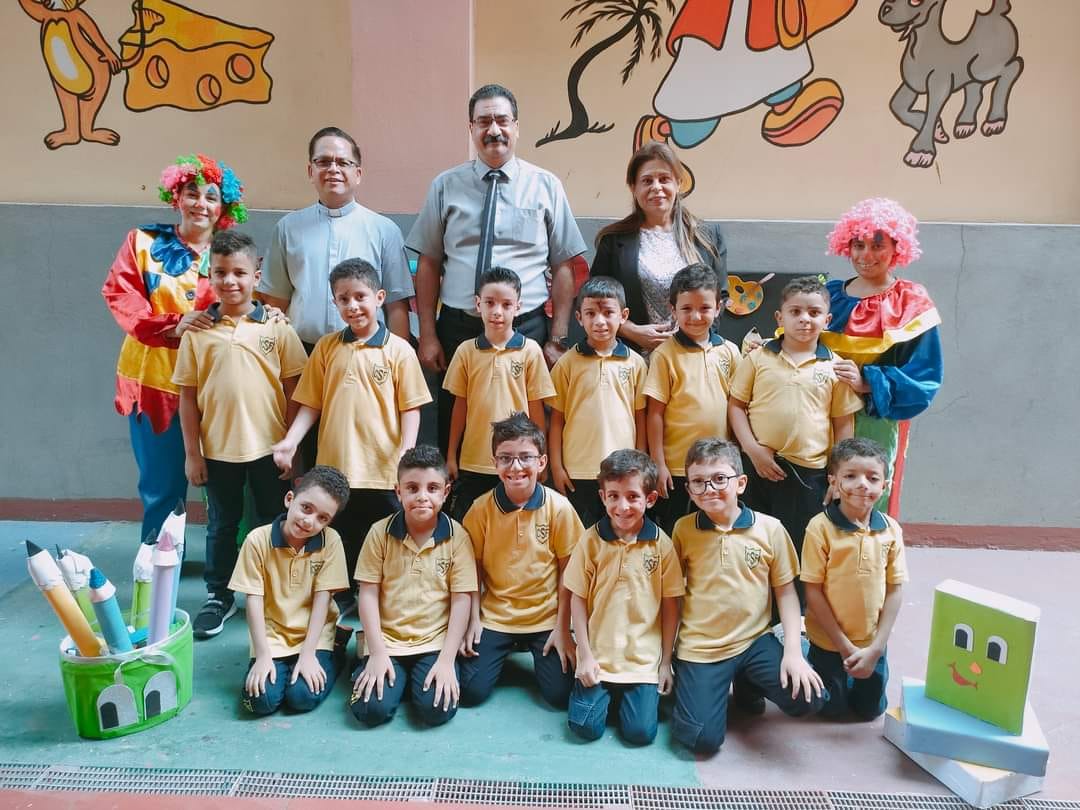
Holy Family School for Boys in Helwan has a long and proud history. It was founded in 1887 by the Comboni Missionaries, inspired by St. Daniel Comboni’s vision of evangelizing through education. At a time when Helwan was a growing district along the Nile River, the missionaries saw the urgent need for education that would form both the intellect and character of young boys—many of whom came from working-class or disadvantaged families.
From its early years, the school emphasized discipline, human dignity, intercultural respect, and academic excellence. Through wars, political changes, and economic crises, Holy Family School remained open, adapting to new realities while holding fast to its missionary spirit. Thousands of students have passed through its doors—Muslims and Christians alike—many of whom have gone on to become doctors, engineers, teachers, and leaders in Egyptian society.
Today, as Principal, I am entrusted with the continuation of this legacy. The school serves over 1,500 students, from kindergarten to Senior High School. Some struggle with learning difficulties or family breakdowns. We offer them not just an education, but a place of security, belonging, and hope.
Our staff is a mix of lay professionals and religious educators, united in the mission of integral formation. We emphasize academic growth alongside values education, respect for diversity, and social responsibility. As with other Comboni institutions, Holy Family is not just a school—it is a missionary space, a place where witness is as important as words.
Serving the OFW Community in Egypt
My ministry with the Filipino OFW community continues in Egypt with new challenges and joys. Many OFWs in Cairo and its surrounding areas are domestic workers, caregivers, nurses, or laborers. Their work is demanding, and they often live in isolation or in difficult environments. For them, the Church becomes a lifeline.
We organize Masses, recollections, spiritual direction, and fellowship events. I visit them in hospitals, attend to family crises, and simply sit and listen. In these encounters, I see again and again how the missionary call is one of presence. Sometimes we do not solve problems, but we stand with them, as Christ stood with the poor and weary.
Faithful Is the One Who Calls
From Eritrea to Sudan, and now Egypt, my missionary journey has unfolded across changing landscapes, languages, and circumstances. There have been times of deep joy and bitter sorrow. I have celebrated life in remote mountain villages and mourned loss in cities ravaged by war. Yet through it all, I have learned this: mission is not about control or success—it is about faithfulness.
It is about showing up when you are tired. About trusting the seeds you plant. About loving people even when you know you might have to leave them. About holding your plans lightly and holding God’s call tightly.
I have been shaped by the people I served: the elders in Eritrea, the students in Sudan, the workers in Cairo. I carry their stories, their laughter, and their tears. I am grateful to the Comboni family, who continue to send us to the margins, where Christ is waiting.
Above all, I am grateful to Christ the Missionary, who walks ahead of me. The mission is not mine. It is His. And wherever He sends me—into exile or into peace—I will go.